Technical detail
Transglutaminase for Fish and Seafood Binding
Fish and seafood products ask a lot from protein structure. Portions need to hold through slicing, chilling, packing, cooking, and service. Surimi-style systems need elastic bite without rubbery density. Seafood analogues need plant, fish, or blended proteins to behave like one intentional matrix.
Transglutaminase Enzyme Solutions supplies transglutaminase, also known as protein-glutamine gamma-glutamyltransferase, for manufacturers developing seafood products where binding strength, texture control, and process reliability matter.
Wholesale and bulk transglutaminase for food manufacturers, ingredient blenders, distributors and resellers. Every order is quoted individually. Request a quote with your product or application, the quantity you need and the destination country.
Build stronger protein architecture in seafood systems
Transglutaminase supports covalent cross-linking between compatible proteins, helping turn loose muscle pieces, minced fish, surimi pastes, and blended matrices into cohesive structures. In commercial terms, that means better control over:
- Portion integrity after forming, chilling, and slicing
- Bite and elasticity in surimi-style products
- Flake retention and reduced breakup in value-added seafood
- Texture design in seafood analogues and hybrid protein systems
- Yield protection where purge, fragmentation, or weak gelation reduces saleable output
- Formulation flexibility across fish, shellfish, dairy, egg, soy, pea, wheat, and other protein systems
The result is not simply “stickier” seafood. It is a more engineered protein network.
Where transglutaminase is used in fish and seafood
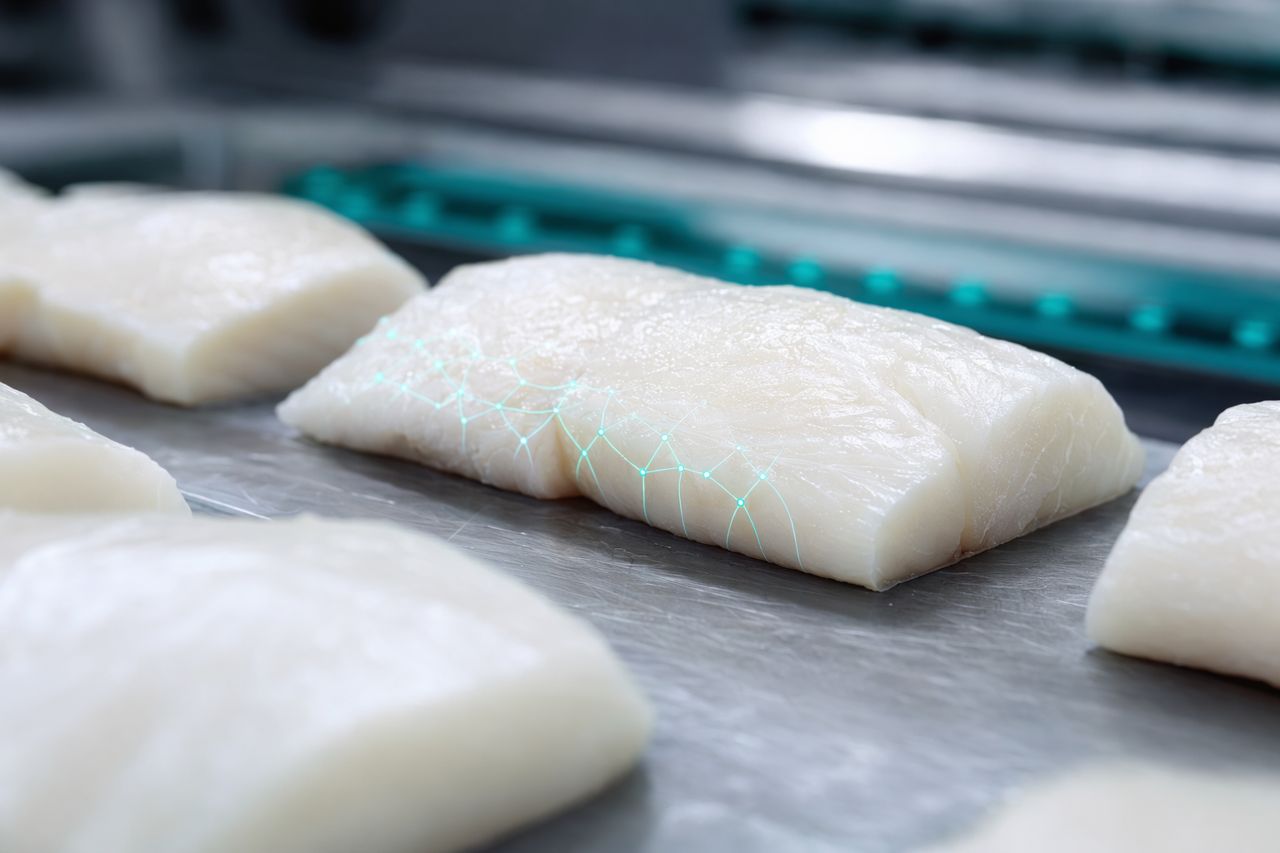
Reformed fish portions
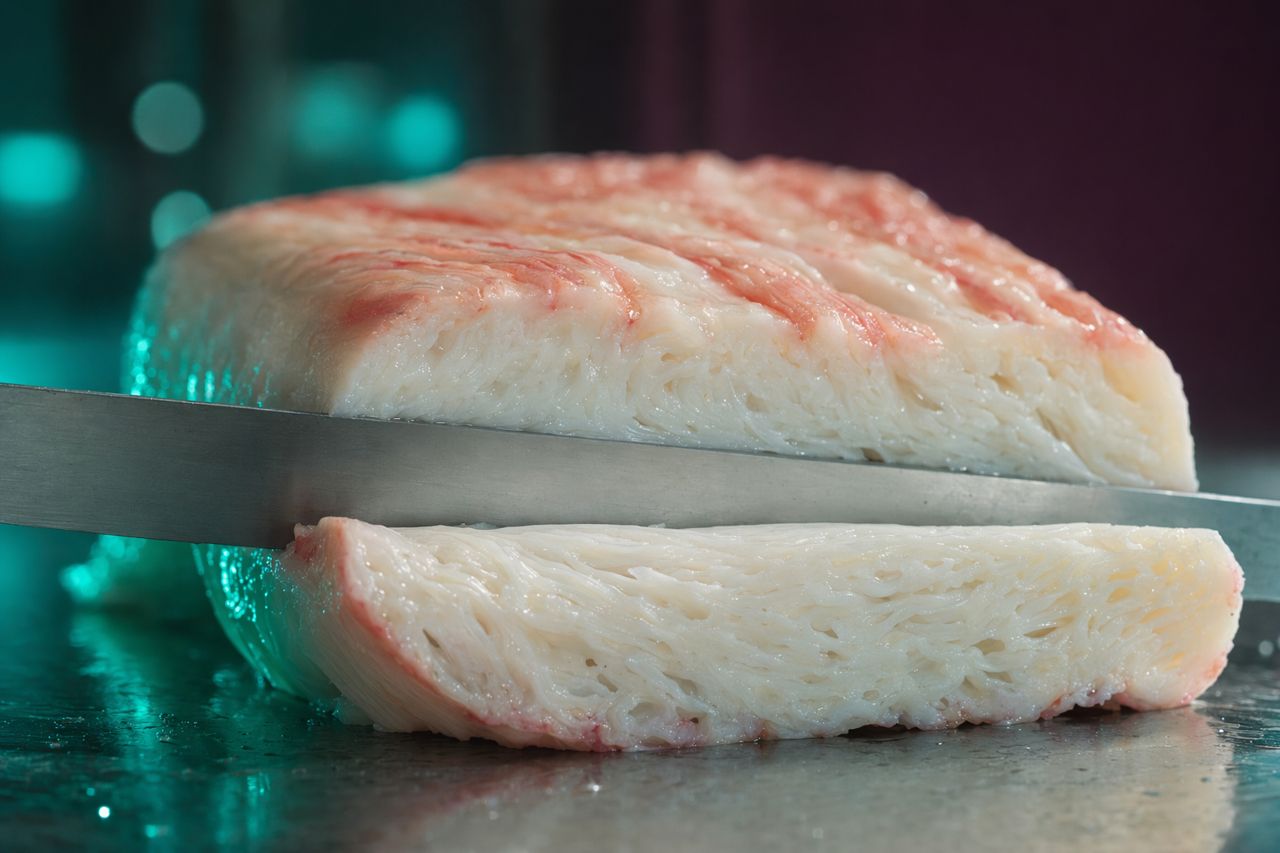
For trimmings, irregular fillets, minced fish, or portion systems, transglutaminase can help create consistent shape, sliceability, and handling strength. It is especially useful where manufacturers need premium portion appearance while reducing trim loss.
Typical development goals include:
- Clean portion edges
- Improved cohesion during vacuum packing
- Reduced seam weakness
- Better slicing performance after chilling
- More consistent cooked bite
Surimi-style gels and formed seafood
Surimi and surimi-inspired products depend on controlled gel strength and elastic texture. Transglutaminase can improve network formation, helping R&D teams tune firmness, spring, chew, and water retention without relying only on heat-set behavior.
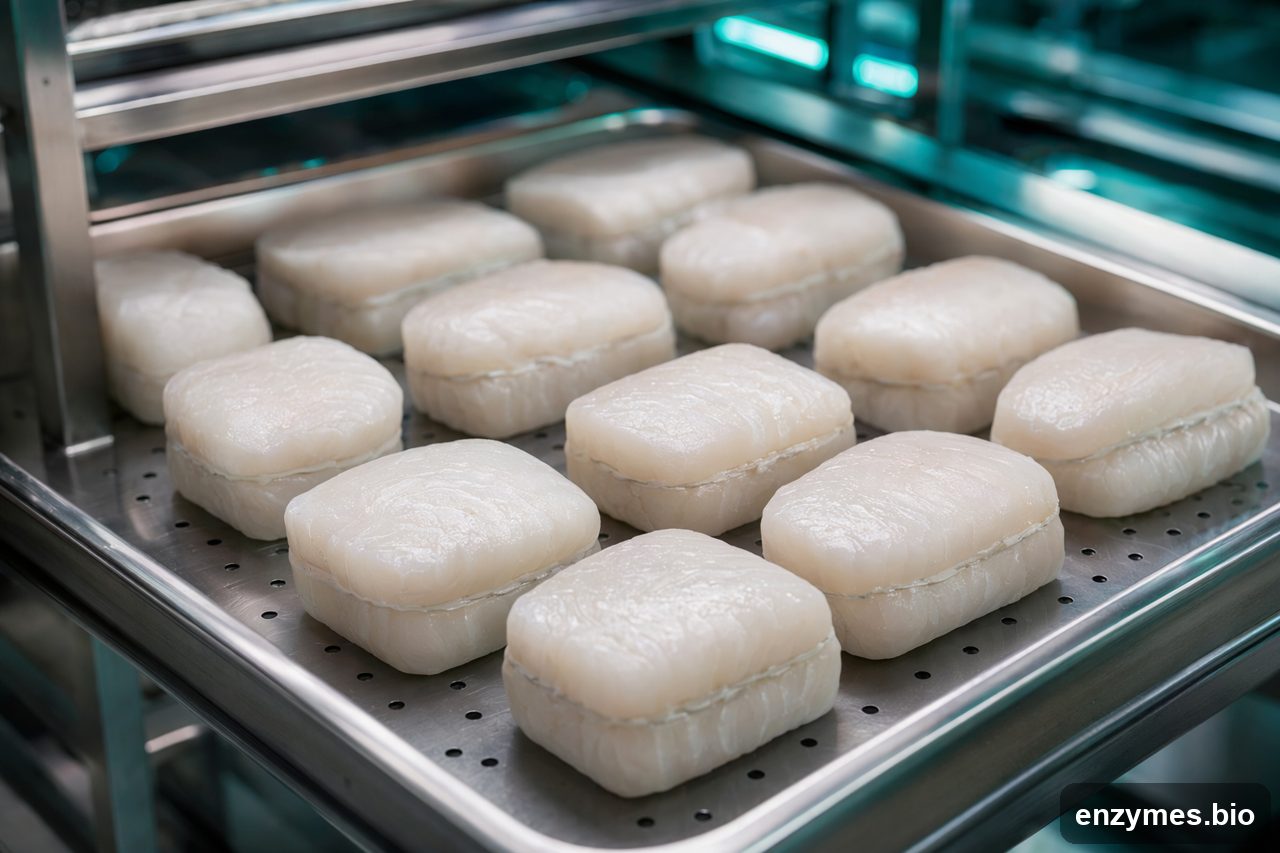
Relevant product formats include:
- Crab-style sticks and flakes
- Fish balls and seafood cakes
- Formed shrimp or scallop analogues
- Seafood fillings and inclusions
- Frozen value-added seafood components
Seafood analogues and hybrid proteins
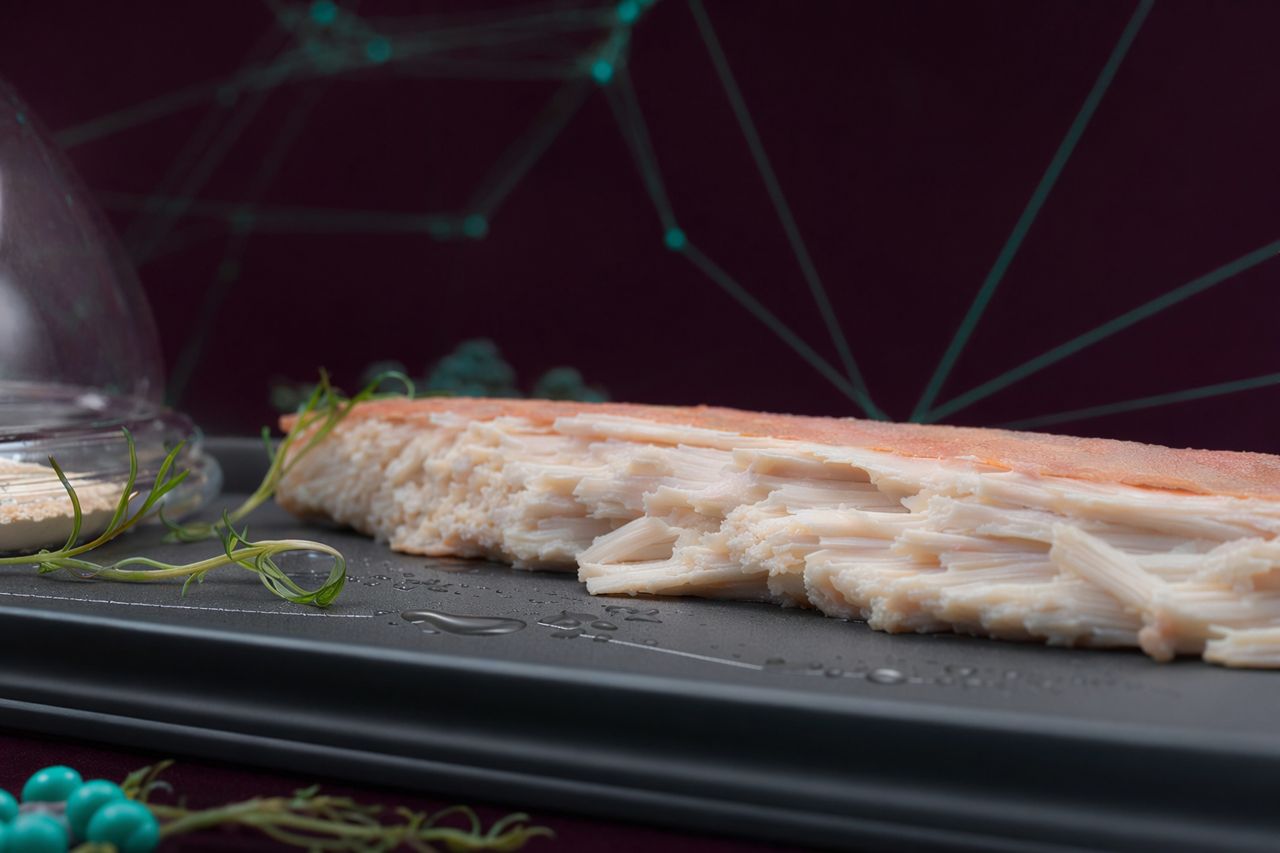
Plant-forward and hybrid seafood formats often combine proteins with very different hydration, gelation, and mouthfeel behavior. Transglutaminase helps create more unified structure where fish protein, plant protein, dairy protein, egg protein, or hydrocolloid systems must work together.
This can support:
- Cleaner bite in plant-based seafood analogues
- Improved cohesion in high-moisture matrices
- Better texture stability after freeze-thaw
- More convincing fibrous or flaked structures
- Lower reliance on heavy binder systems where label strategy allows
Performance priorities for commercial seafood production
Binding strength without heavy-handed texture
A good seafood binder should not make a delicate fish system feel dense or artificial. Transglutaminase Enzyme Solutions focuses on application-fit guidance: enough network formation to strengthen structure, without overbuilding chew or masking the native seafood character.
Yield and handling stability
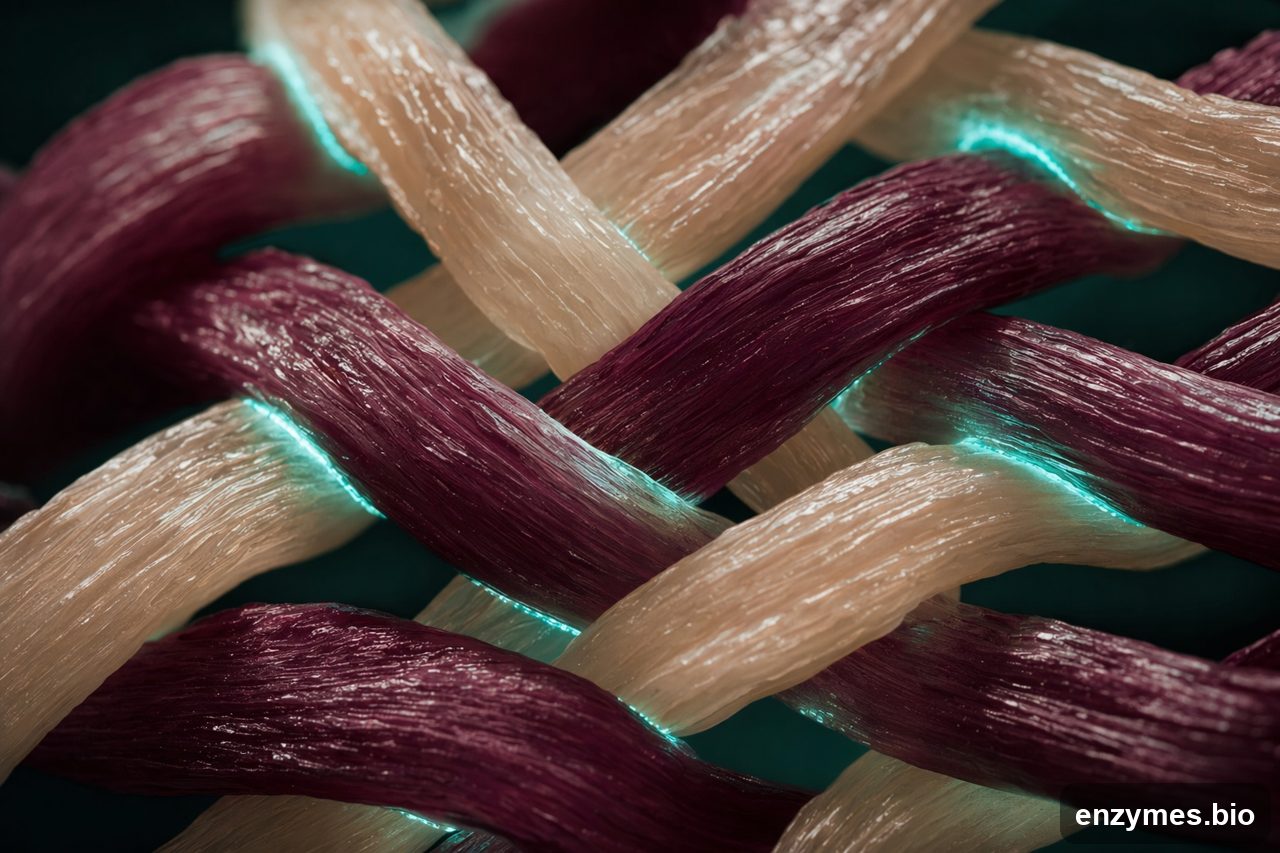
Weak binding can show up as purge, fragments, cracked portions, or poor slice yield. Transglutaminase supports a stronger internal matrix, which can help protect saleable yield and reduce downgrade risk when the process is well designed.
Cold-process compatibility
Many seafood systems are built under chilled or controlled-temperature conditions. Transglutaminase can be incorporated into cold-side workflows, then allowed to develop structure during holding before downstream packing, freezing, or cooking steps.
Flexible protein system design
Fish species, salt level, moisture, pH, fat content, cryoprotectants, phosphates, starches, fibers, and hydrocolloids all influence the final network. We help technical teams evaluate the complete formula rather than treating the enzyme as an isolated additive.
Formulation and process considerations
For seafood applications, performance depends on the total process. Key variables include:
- Protein type and freshness
- Particle size or muscle piece geometry
- Moisture and salt balance
- Mixing energy and distribution quality
- Contact time before setting, freezing, or cooking
- Chilled hold conditions
- Interaction with starches, fibers, gums, phosphates, and seasonings
- Final thermal process, if used
Transglutaminase Enzyme Solutions does not publish one-size-fits-all use levels because commercial seafood systems vary widely. Instead, we support pilot work around your target texture, processing window, ingredient declaration, and cost-in-use targets.
Seafood product types supported
- Reformed fish fillets and blocks
- Portion-controlled fish products
- Surimi-style seafood
- Crab, shrimp, scallop, and lobster-style analogues
- Seafood cakes, balls, patties, and fillings
- Frozen value-added seafood
- Hybrid fish-and-plant protein formats
- High-protein seafood snacks and inclusions
What buyers and technical teams can expect
For R&D
You get a protein-network tool that can be tuned for firmness, elasticity, flake, cohesion, and moisture retention. We help frame trials around measurable sensory and processing outcomes, not vague “binding improvement.”
For production
The priority is repeatability: clean dispersion, predictable handling, practical hold windows, and robust performance across normal seafood manufacturing conditions.
For procurement
We support commercial evaluation with clear product documentation, lot consistency expectations, scalable supply planning, and quote structures aligned to industrial purchasing requirements.
Request pricing or a technical sample discussion
Tell us the seafood format, protein base, process route, and target texture. Transglutaminase Enzyme Solutions will respond with application-fit guidance and commercial pricing through our own contact workflow.
Ready for a quote? Use the inquiry form at the foot of this page. Tell us the application, the quantity per order or per year and the delivery country. Price, pack size and lead time are quoted per order.