Technical detail
How to Plan a Transglutaminase Trial
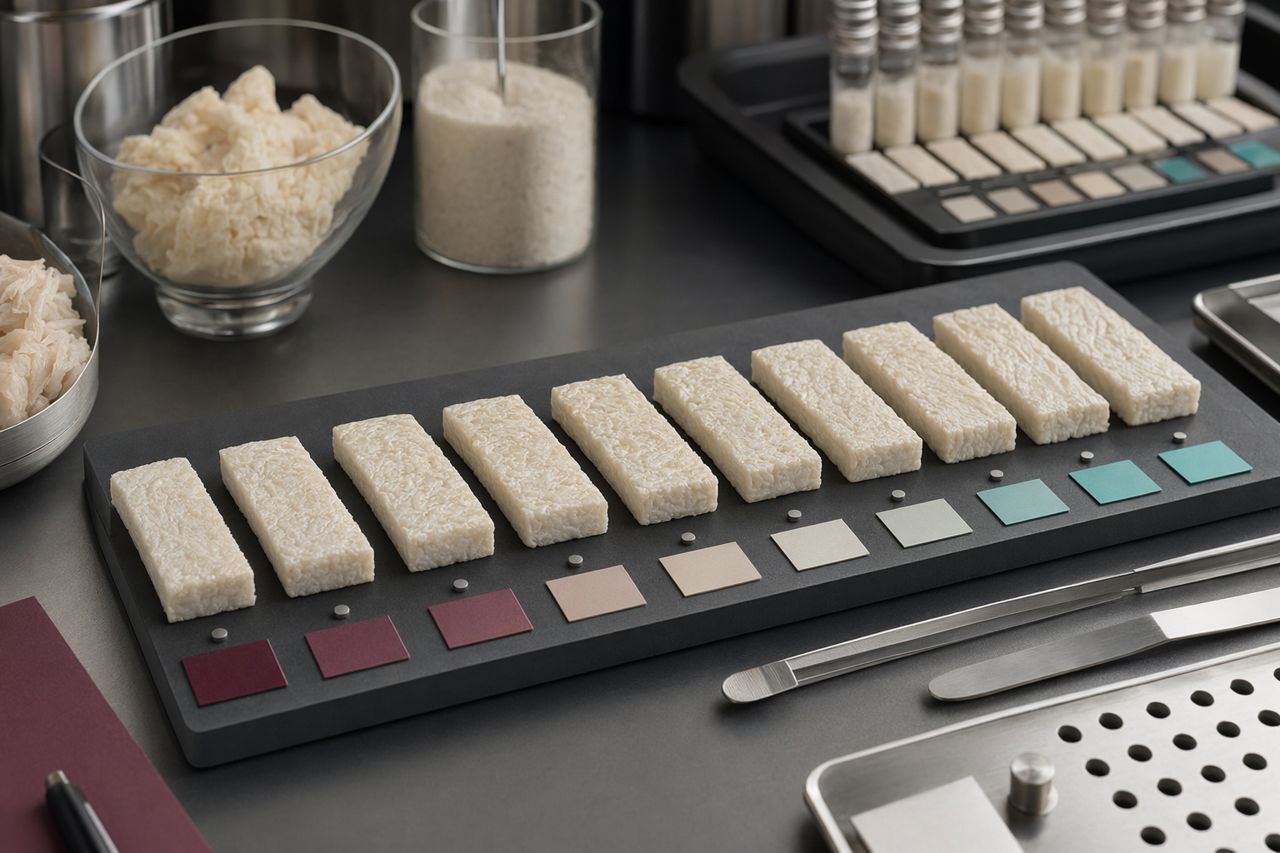
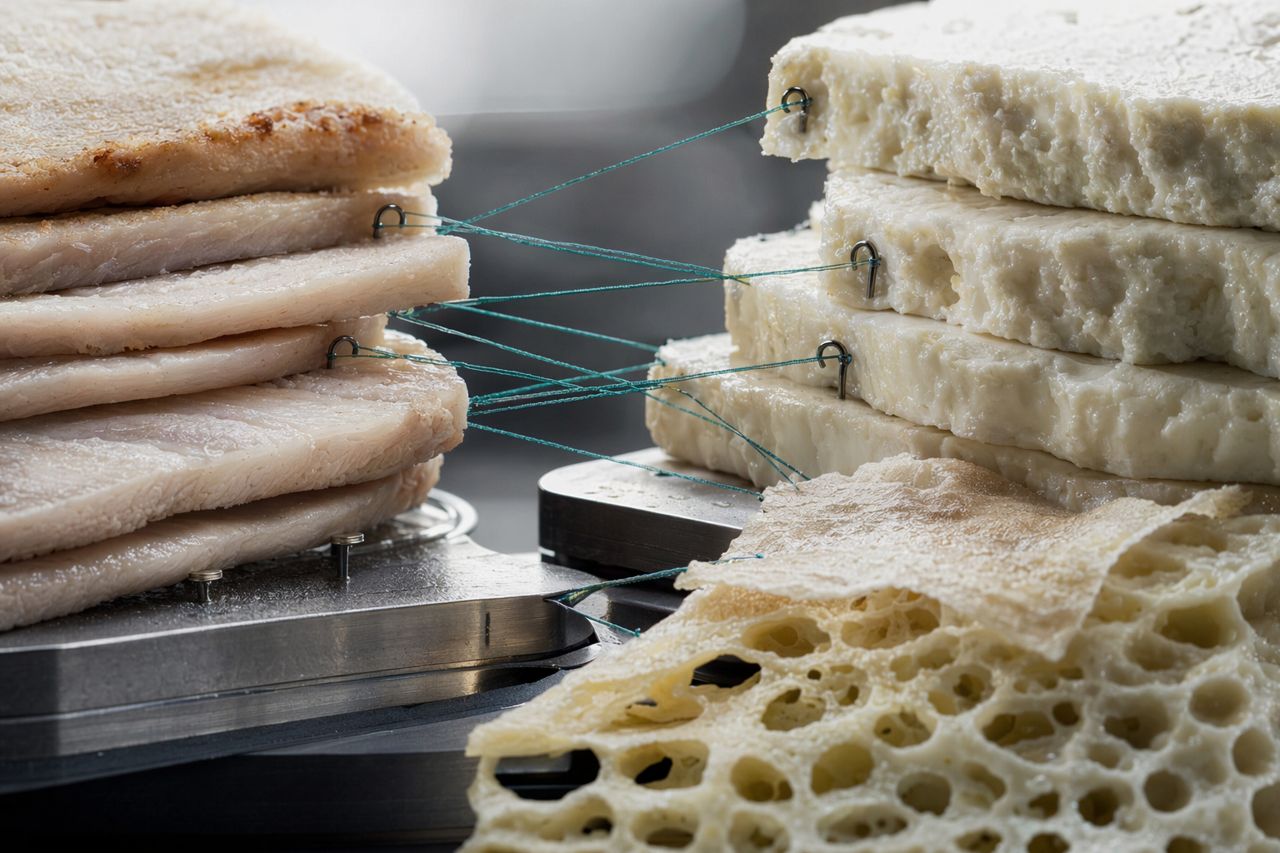
Transglutaminase, also known as protein-glutamine gamma-glutamyltransferase, is not a plug-in ingredient. It is a protein-system design tool. A good trial should show whether the enzyme can improve binding strength, water management, slice integrity, gel structure, bite, or yield inside your actual formulation and process constraints.
This guide is built for R&D, procurement, product innovation, and technical manufacturing teams preparing an internal trial before moving toward production quantities.
Wholesale and bulk transglutaminase for food manufacturers, ingredient blenders, distributors and resellers. Every order is quoted individually. Request a quote with your product or application, the quantity you need and the destination country.
Start with the commercial question
Before you build the bench plan, define what the enzyme has to prove commercially. Transglutaminase can support several goals, but each goal needs a different trial design.
Typical objectives include:
- Improved binding in formed meat, seafood, poultry, plant protein, or hybrid systems
- Stronger gel architecture in dairy, cultured, analog, or high-protein applications
- Better sliceability and handling strength after chilling, cooking, freezing, or thawing
- Yield improvement through reduced purge, better water retention, or lower cook loss
- Cleaner formulation design by reducing reliance on certain binders, gums, or texturizers
- Texture repair in low-fat, high-moisture, or reformulated products
- Protein system flexibility when working with variable raw material streams
A trial without a business target can easily become a texture demonstration. A useful trial answers a buying question: does this enzyme create measurable value in the application you actually need to manufacture?
Map the protein system before testing
Transglutaminase works by forming covalent links between suitable protein sites. The result depends on the protein source, particle size, hydration, salt level, pH environment, thermal path, mixing energy, holding time, and the presence of competitive functional ingredients.
Document the system before the first sample is made:
- Main protein source and supplier lot
- Protein format: whole muscle, mince, isolate, concentrate, dispersion, emulsion, gel, slurry, or blend
- Moisture and fat profile
- Salt and mineral system
- pH target or natural pH range
- Existing binders, starches, fibers, hydrocolloids, phosphates, gums, emulsifiers, or cultures
- Heat treatment, chilling, freezing, thawing, and packaging steps
- Process hold windows and operational constraints
This mapping helps separate enzyme performance from formulation noise.
Build the right control set
A transglutaminase trial should not rely on a single treated sample. Build a small but disciplined control set.
Recommended structure:
- Current production formula — your commercial baseline.
- Process control — same handling and hold conditions without enzyme.
- Low enzyme condition — conservative addition level.
- Target enzyme condition — expected application range.
- High enzyme condition — stress test for excessive firmness or processing risk.
- Optional formulation-reduction condition — enzyme plus reduced binder, gum, phosphate, starch, or protein addition where commercially relevant.
Keep raw materials, mixing order, temperature path, hold time, packaging, and cooking or setting conditions consistent. If too many variables move at once, the result may look interesting but will be hard to scale.
Choose success metrics before the trial begins
Do not evaluate transglutaminase only by visual impression. Define success in measurable, application-relevant terms.
Useful evaluation criteria may include:
- Binding strength or cohesion after forming
- Slice integrity and edge definition
- Bite, chew, firmness, spring, or gel fracture profile
- Cook yield, purge, drip, or syneresis
- Emulsion stability or phase separation
- Handling strength before and after thermal treatment
- Freeze-thaw stability
- Sensory texture acceptance
- Cut surface appearance and uniformity
- Production tolerance: mixability, pumpability, filling, forming, slicing, or extrusion behavior
For procurement teams, include cost-in-use, rework reduction, yield impact, and operational fit. The best result is not always the firmest sample; it is the formulation that gives the strongest commercial case.
Control the process window
Transglutaminase performance is strongly shaped by contact time, temperature exposure, protein availability, and distribution. During trial planning, decide how the enzyme will be introduced and where it has enough process time to work.
Key questions:
- Will the enzyme be dry blended, pre-dispersed, injected, tumbled, mixed, hydrated, or incorporated into a slurry?
- Is the matrix low-shear, high-shear, vacuum-mixed, emulsified, or extruded?
- How long can the product hold before cooking, chilling, freezing, or packaging?
- Is the process designed to allow enzyme action before deactivation or structural lock-in?
- Can the plant maintain the same thermal and timing profile at scale?
A bench trial should mimic the intended production sequence as closely as practical. If the plant has a narrow hold window, test within that window instead of designing an idealized lab process that operations cannot run.
Watch for over-binding
More enzyme is not automatically better. Excessive crosslinking can create textures that are too rubbery, brittle, dense, elastic, dry, or resistant to bite. In some systems it can also reduce process flexibility by making the matrix set earlier than expected.
Signs of over-treatment include:
- Tough or rubber-like texture
- Reduced juiciness perception
- Poor bite release
- Surface wrinkling or contraction
- Uneven structure due to poor enzyme distribution
- Difficult slicing, pumping, forming, or filling
- Lower sensory preference despite higher instrumental strength
The target is controlled architecture: enough crosslinking to deliver value without losing the product’s intended eating quality.
Application notes by product category
Meat, poultry, and seafood
Trial priorities often include bonding strength, formed portion integrity, cook yield, purge control, and slice performance. Use realistic raw material geometry and handling conditions. Whole muscle bonding, restructured products, and fine comminuted systems may need different mixing and contact strategies.
Dairy and high-protein gels
Focus on gel firmness, water release, mouthfeel, cut stability, and compatibility with cultures, heat treatment, minerals, and protein concentration. Transglutaminase can help build structure, but the best trial design respects the full dairy process path.
Plant-based and hybrid systems
Plant proteins vary widely in solubility, particle structure, hydration, and functionality. Trial planning should compare protein lots and pre-hydration strategies. Measure bite, elasticity, binding, juiciness, freeze-thaw behavior, and interaction with fibers, oils, starches, and hydrocolloids.
Sauces, fillings, emulsions, and fine matrices
In dispersed systems, distribution and process timing are central. Evaluate viscosity, phase stability, heat response, gel development, and final mouthfeel. Avoid judging the enzyme in isolation; evaluate it against the full stabilizer and emulsifier system.
Prepare procurement-ready data
Once the technical team identifies a promising condition, translate it into decision data.
Include:
- Application and formula version
- Raw material sources and lots
- Addition strategy and process point
- Bench and pilot process sequence
- Texture, yield, and stability results
- Sensory notes and defects observed
- Estimated cost-in-use
- Packaging, storage, and shelf-life observations
- Operational risks and required process controls
- Recommended next trial size and target production use case
Procurement does not need a lab notebook; it needs a clear technical justification for buying production inventory.
Trial checklist
Use this checklist before requesting pricing or trial material.
- [ ] Define the primary commercial objective
- [ ] Select one application and one base formula
- [ ] Document the protein system and process path
- [ ] Build a baseline, process control, and enzyme range
- [ ] Keep non-enzyme variables fixed
- [ ] Set texture, yield, stability, and handling metrics in advance
- [ ] Include sensory review, not only technical measurements
- [ ] Test realistic hold times and thermal conditions
- [ ] Record plant-scale constraints early
- [ ] Convert the winning condition into cost-in-use and scale-up data
Common trial mistakes
Avoid these before they consume sample material and development time:
- Testing in a simplified lab matrix that does not represent production
- Changing enzyme level, salt, protein, gum, and process time in the same trial
- Evaluating only the best-looking sample without yield or handling data
- Ignoring raw material variability
- Using unrealistic holding conditions
- Selecting the firmest texture instead of the best commercial texture
- Moving to scale-up without distribution and process-window confirmation
When to move from bench to pilot
Move to pilot when the trial shows repeatable improvement against the baseline and the process can be realistically operated at plant scale. The pilot should test distribution, batch size, equipment shear, temperature control, packaging, storage, and final consumer-relevant texture.
Bench success proves potential. Pilot success proves manufacturability.
Request trial guidance or pricing
If you are preparing a transglutaminase trial, Transglutaminase Enzyme Solutions can help align the enzyme format, application target, process window, and purchasing plan. Share the product category, protein system, intended trial scale, and the performance target you need to prove.
Ready for a quote? Use the inquiry form at the foot of this page. Tell us the application, the quantity per order or per year and the delivery country. Price, pack size and lead time are quoted per order.